About Guess Who's Coming to Dinner
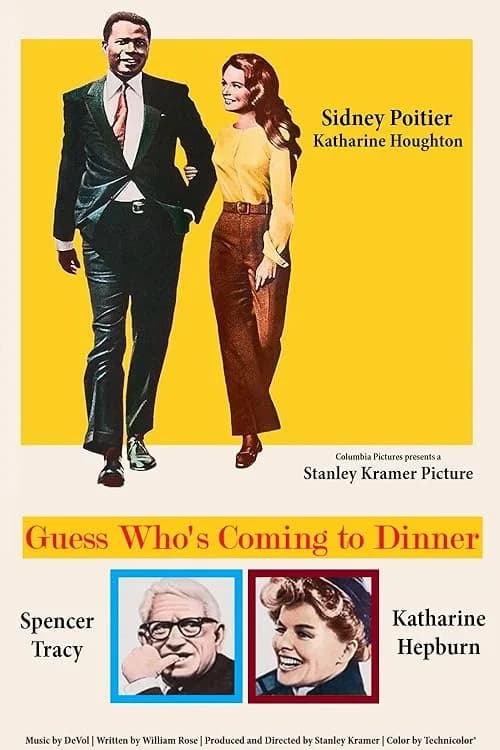
Stanley Kramer's 1967 landmark film 'Guess Who's Coming to Dinner' remains a powerful and relevant exploration of racial prejudice and generational conflict. The story follows Joanna Drayton (Katharine Houghton), a young white woman who returns home to her liberal parents, Matt and Christina (Spencer Tracy and Katharine Hepburn), with her new fiancé, Dr. John Prentice (Sidney Poitier). The catch? John is Black, and his arrival forces the supposedly progressive Draytons to confront their own unexamined biases during one tense, transformative evening.
The film's brilliance lies in its nuanced performances. Spencer Tracy, in his final role, delivers a masterclass as the conflicted father grappling with societal fears versus his love for his daughter. Katharine Hepburn shines as the more immediately accepting but equally troubled mother, earning her a second Academy Award. Sidney Poitier is impeccable, portraying John with intelligence, grace, and quiet strength that challenges every stereotype.
More than just a 'problem film,' Kramer's direction uses sharp, witty dialogue to dissect the hypocrisy of liberal idealism. While some aspects feel dated, the core emotional truth—the collision of love, family, and ingrained social norms—is timeless. Viewers should watch this classic not only for its historic significance in breaking Hollywood barriers but for its moving, human story about the courage it takes to truly live by one's principles. It is a essential piece of cinema that continues to provoke thought and conversation.
The film's brilliance lies in its nuanced performances. Spencer Tracy, in his final role, delivers a masterclass as the conflicted father grappling with societal fears versus his love for his daughter. Katharine Hepburn shines as the more immediately accepting but equally troubled mother, earning her a second Academy Award. Sidney Poitier is impeccable, portraying John with intelligence, grace, and quiet strength that challenges every stereotype.
More than just a 'problem film,' Kramer's direction uses sharp, witty dialogue to dissect the hypocrisy of liberal idealism. While some aspects feel dated, the core emotional truth—the collision of love, family, and ingrained social norms—is timeless. Viewers should watch this classic not only for its historic significance in breaking Hollywood barriers but for its moving, human story about the courage it takes to truly live by one's principles. It is a essential piece of cinema that continues to provoke thought and conversation.