About Marvin's Room
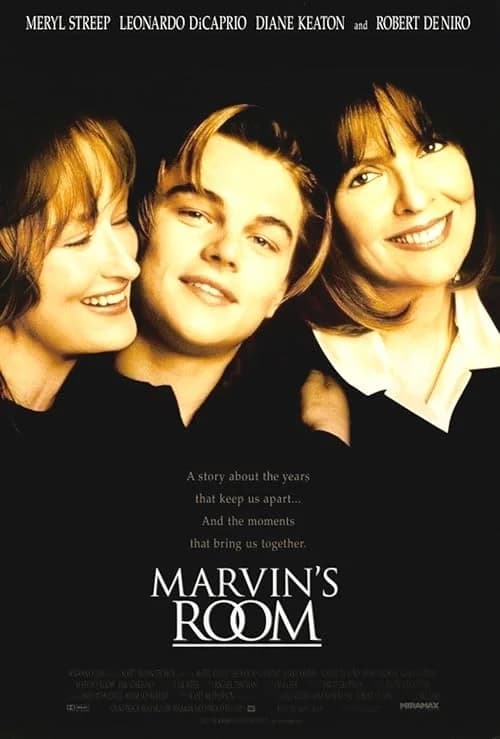
Marvin's Room is a poignant 1996 family drama that explores themes of sacrifice, reconciliation, and the complex bonds of kinship. The film centers on Bessie (Diane Keaton), a selfless woman who has spent years caring for her bedridden father, Marvin (Hume Cronyn), and her eccentric aunt, Ruth (Gwen Verdon). Her quiet, devoted life is upended when she is diagnosed with leukemia and must reach out to her estranged sister, Lee (Meryl Streep), for help. Lee, a fiercely independent single mother, arrives from Ohio with her troubled, rebellious teenage son, Hank (Leonardo DiCaprio), setting the stage for an emotional family reunion filled with tension, guilt, and ultimately, redemption.
Directed by Jerry Zaks, the film is anchored by powerhouse performances from its stellar cast. Diane Keaton delivers a quietly moving portrayal of Bessie's grace under pressure, while Meryl Streep brilliantly captures Lee's defensive bravado and underlying vulnerability. A young Leonardo DiCaprio shines in an early dramatic role, depicting Hank's anger and gradual softening with raw authenticity. The ensemble's chemistry makes the family dynamics feel painfully real and deeply resonant.
Viewers should watch Marvin's Room for its heartfelt storytelling and exceptional acting. It's a film that doesn't rely on melodrama but instead finds its power in quiet moments of connection and the messy, beautiful process of forgiveness. The narrative thoughtfully examines what it means to care for others and oneself, offering a touching look at how families can heal even after years of distance. With its emotional depth and masterful performances, Marvin's Room remains a compelling watch for anyone who appreciates character-driven dramas about love, responsibility, and second chances.
Directed by Jerry Zaks, the film is anchored by powerhouse performances from its stellar cast. Diane Keaton delivers a quietly moving portrayal of Bessie's grace under pressure, while Meryl Streep brilliantly captures Lee's defensive bravado and underlying vulnerability. A young Leonardo DiCaprio shines in an early dramatic role, depicting Hank's anger and gradual softening with raw authenticity. The ensemble's chemistry makes the family dynamics feel painfully real and deeply resonant.
Viewers should watch Marvin's Room for its heartfelt storytelling and exceptional acting. It's a film that doesn't rely on melodrama but instead finds its power in quiet moments of connection and the messy, beautiful process of forgiveness. The narrative thoughtfully examines what it means to care for others and oneself, offering a touching look at how families can heal even after years of distance. With its emotional depth and masterful performances, Marvin's Room remains a compelling watch for anyone who appreciates character-driven dramas about love, responsibility, and second chances.