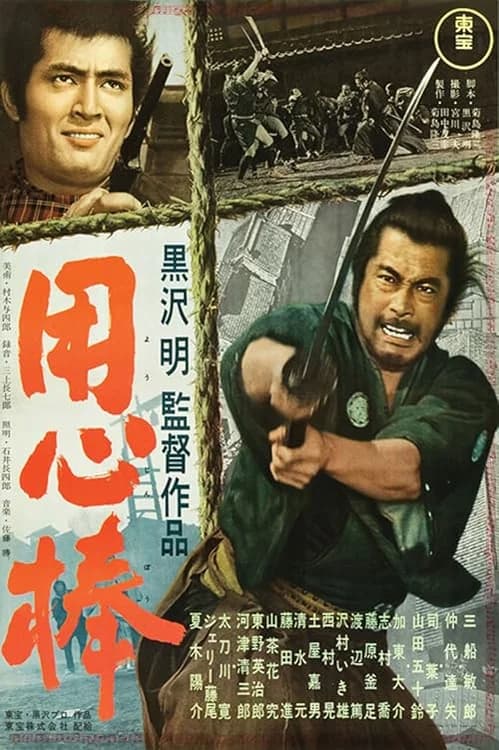
About Yojimbo
Akira Kurosawa's 1961 masterpiece Yojimbo stands as one of the most influential films in cinema history, blending razor-sharp storytelling with breathtaking visual composition. The film follows Sanjuro, a wandering ronin played with iconic physicality by Toshiro Mifune, who arrives in a town torn apart by two rival criminal factions. Seeing an opportunity, Sanjuro decides to play both sides against each other, manipulating the gangs through cunning and deception rather than direct confrontation.
Mifune delivers one of his most memorable performances, embodying Sanjuro's world-weary wisdom and lethal capability with subtle gestures and expressive eyes. Kurosawa's direction is masterful, creating tension through carefully framed shots and deliberate pacing that builds to explosive action sequences. The black-and-white cinematography by Kazuo Miyagawa creates striking visual contrasts that enhance the moral ambiguity of the story.
Yojimbo's brilliance lies in its clever narrative structure and cultural impact. The film essentially created the "man with no name" archetype that would later define Sergio Leone's spaghetti Westerns and countless action heroes. Beyond its historical significance, Yojimbo remains immensely watchable today because of its smart script, dark humor, and timeless themes of corruption, greed, and individual agency. Viewers should watch this film not just as a classic of Japanese cinema, but as a masterclass in storytelling economy and character development that continues to influence filmmakers worldwide.
Mifune delivers one of his most memorable performances, embodying Sanjuro's world-weary wisdom and lethal capability with subtle gestures and expressive eyes. Kurosawa's direction is masterful, creating tension through carefully framed shots and deliberate pacing that builds to explosive action sequences. The black-and-white cinematography by Kazuo Miyagawa creates striking visual contrasts that enhance the moral ambiguity of the story.
Yojimbo's brilliance lies in its clever narrative structure and cultural impact. The film essentially created the "man with no name" archetype that would later define Sergio Leone's spaghetti Westerns and countless action heroes. Beyond its historical significance, Yojimbo remains immensely watchable today because of its smart script, dark humor, and timeless themes of corruption, greed, and individual agency. Viewers should watch this film not just as a classic of Japanese cinema, but as a masterclass in storytelling economy and character development that continues to influence filmmakers worldwide.