About Gaslight
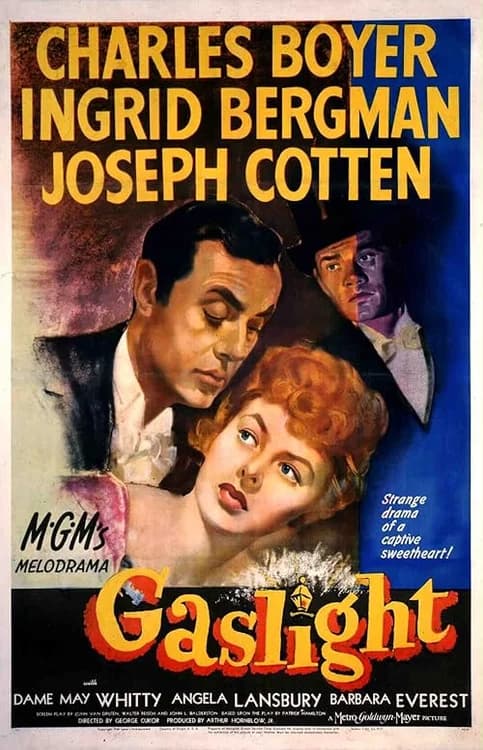
George Cukor's 1944 masterpiece 'Gaslight' remains one of cinema's most influential psychological thrillers, giving its name to the manipulative tactic of making someone doubt their own reality. Set in foggy Victorian London, the film follows Paula Alquist (Ingrid Bergman), who returns to the home where her aunt was murdered years earlier, now married to the charming but sinister Gregory Anton (Charles Boyer). As Gregory isolates Paula and orchestrates a series of bizarre events—vanishing objects, flickering gaslights, unexplained footsteps—he systematically undermines her sanity to conceal his own dark secrets.
Ingrid Bergman delivers a tour-de-force, Oscar-winning performance that masterfully portrays Paula's gradual unraveling, moving from confidence to terrified confusion. Charles Boyer is equally compelling as the manipulative husband, his performance a chilling study in controlled menace. The film's atmospheric direction by George Cukor creates palpable tension through shadowy cinematography and claustrophobic set design that mirrors Paula's psychological imprisonment.
What makes 'Gaslight' essential viewing is its timeless exploration of psychological manipulation and its groundbreaking portrayal of domestic psychological abuse. The film's tension builds meticulously toward a satisfying climax involving a determined Scotland Yard inspector (Joseph Cotten). Beyond its thriller elements, 'Gaslight' offers rich period detail, complex character dynamics, and a feminist subtext about female agency in a restrictive society. For anyone interested in classic cinema, psychological drama, or simply a brilliantly crafted suspense story, this film remains remarkably powerful and relevant eight decades after its release.
Ingrid Bergman delivers a tour-de-force, Oscar-winning performance that masterfully portrays Paula's gradual unraveling, moving from confidence to terrified confusion. Charles Boyer is equally compelling as the manipulative husband, his performance a chilling study in controlled menace. The film's atmospheric direction by George Cukor creates palpable tension through shadowy cinematography and claustrophobic set design that mirrors Paula's psychological imprisonment.
What makes 'Gaslight' essential viewing is its timeless exploration of psychological manipulation and its groundbreaking portrayal of domestic psychological abuse. The film's tension builds meticulously toward a satisfying climax involving a determined Scotland Yard inspector (Joseph Cotten). Beyond its thriller elements, 'Gaslight' offers rich period detail, complex character dynamics, and a feminist subtext about female agency in a restrictive society. For anyone interested in classic cinema, psychological drama, or simply a brilliantly crafted suspense story, this film remains remarkably powerful and relevant eight decades after its release.